
How to Choose the Right Non-Standard Parts Customization Supplier?
Tangshan, November 2026 | Yuexin Machinery
In recent months, Tangshan Yuexin Machinery Manufacturing Co., Ltd. has received a steady stream of inquiries from Bangladesh, Canada, India, the UK, Nigeria, Pakistan, the Philippines, and the United States—as well as from a buyer supplying heavy-duty mining components to the European aftermarket. What these buyers have in common is that they are not looking for off-the-shelf products from a standard catalog; rather, they provide a technical drawing, a photograph of a sample, or specifications for a unique part that cannot be found in any standard product list. This is the essence of non-standard parts customization — also referred to as custom non-standard parts manufacturing — transforming a client's drawings into cast, welded, or precision-machined components tailored to their specific equipment. Below, we break down the entire process—from drawing review to final inspection and delivery—as practiced in an actual manufacturing facility.
What Does Custom Non-Standard Parts Manufacturing Actually Entail?
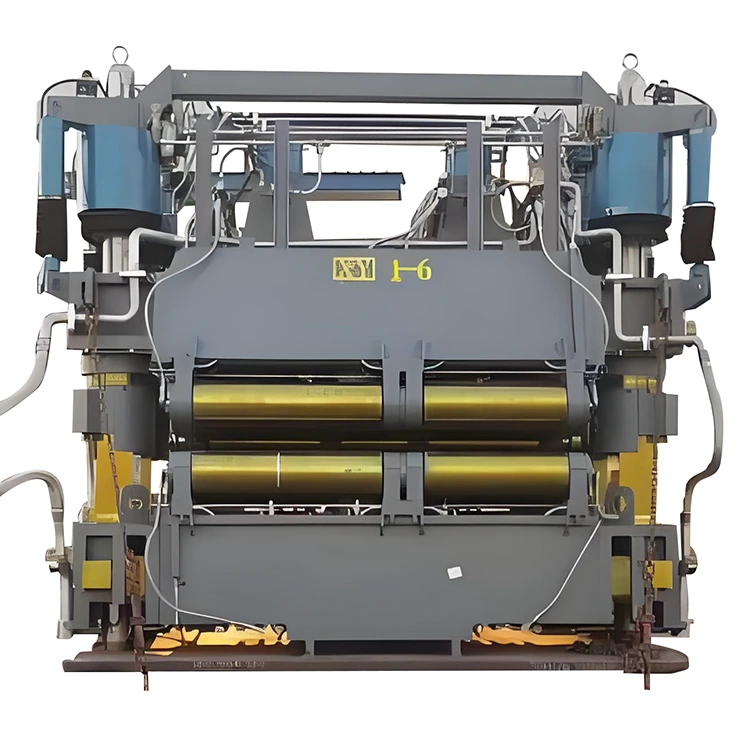
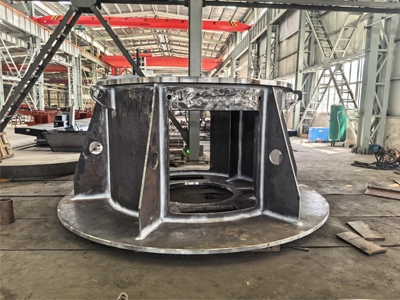
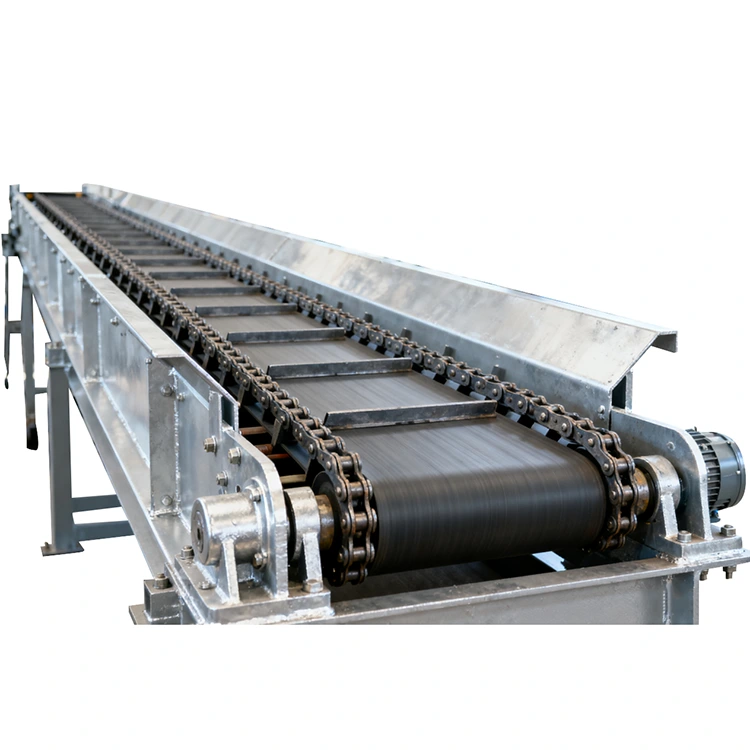
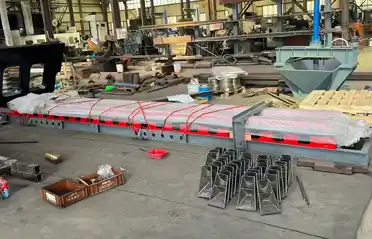
For many overseas buyers, the term may sound broader than it actually is. At Yuexin, custom projects generally fall into three categories: first, castings made of gray iron, ductile iron, or carbon steel—such as the ductile iron cover plates recently requested by a buyer in Bangladesh; second, welded steel structures, like the steel-plate frame for a horizontal conveyor requested by a Canadian engineering firm; and third, machined components for power transmission systems or rolling mills, such as the ratchet-style cooling bed parts inquired about by an Indian steel group. Material grades, heat treatment, surface finishing, and tolerance requirements are all confirmed individually based on the provided drawings, rather than selected from a pre-existing standard list. This drawing-driven approach is the true nature of the process.
Inside the Tangshan Workshop: Equipment and Production Workflow
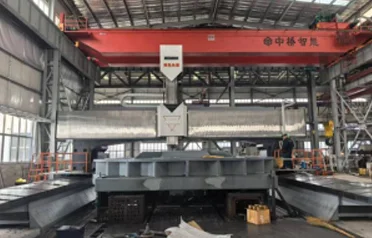
The factory is located in the Tangshan industrial zone, approximately a two-hour drive from the Port of Tianjin. Leveraging 22 years of experience in mechanical machining and a workforce of approximately 120 employees—including 28 technical specialists—our core production line spans the entire process from casting and raw material preparation to precision finishing. We utilize resin-sand molding and medium-frequency induction melting to produce cast blanks, while large-scale 8m × 12.5m CNC gantry milling machines, vertical CNC machining centers, and lathes are employed for precision machining. Our facilities also include CO2-shielded welding stations for steel plate fabrication and heat-treatment furnaces for tempering and hardening, achieving precision levels of IT7–IT8 for critical mating surfaces. A typical custom (non-standard) order follows a five-step workflow: technical drawing review, quotation with material recommendations, prototype or sample production, batch manufacturing, and export-grade packaging. For export, we use fumigated plywood crates lined with moisture-proof film—a mandatory requirement for many buyers across Europe, Africa, and Southeast Asia.
Quality Control and Certification
Because these components are often integrated directly into active production lines, any dimensional deviation is strictly unacceptable. Our inspection facility is equipped with Coordinate Measuring Machines (CMM), direct-reading spectrometers (for material composition analysis), Rockwell hardness testers, and ultrasonic and magnetic particle testing equipment for inspecting welds and castings. Every shipment includes material certificates and inspection reports linked to the specific purchase order number, allowing the buyer's quality assurance team to trace each heat number back to the original raw materials. We operate in accordance with the ISO 9001 quality management system; certificates are available upon request, and we also provide on-site photographs of the production process for each specific order.
Real-World Export Examples
Four recent cases illustrate the scope of our capabilities. A buyer in Bangladesh required ductile iron cover castings with specific tolerance requirements for their sealing surfaces; to prevent shrinkage cavities—a common issue in thick-walled ductile iron parts—we modified the molds twice during the prototyping phase. A Canadian engineering firm requested steel-plate horizontal conveyor sections with strictly controlled welding deformation; we managed this by employing segmented welding followed by post-weld stress-relief treatment. An Indian steel-rolling group required cooling-bed ratchets and associated drive components capable of withstanding the wear and tear of handling hot steel billets. We upgraded the material to a higher wear-resistant grade and documented the hardness profile for every individual heat (batch). In every instance, our technical engagement begins with the client's PDF drawings—never with a generic product catalog. Another client, a supplier of heavy-duty mining components for the European aftermarket, recently requested our latest catalog and inquired about standard lead times for 200-ton ladles, custom-cast conical segments, and large-scale CNC-machined parts. Such large-scale inquiries serve as a true litmus test for a manufacturer's actual capabilities—specifically their gantry machining capacity and foundry infrastructure—which cannot be addressed merely by quoting from a catalog.
How to Determine if a Supplier Is Truly Capable of Custom Manufacturing
For buyers sifting through a dozen or more quotes, I suggest asking three questions: Can the supplier provide video footage from the shop floor showing similar orders currently in production (rather than just photos of finished goods)? Does the quote itemize the material specifications, heat treatment processes, and inspection methods, or does it simply provide a lump-sum price? Can they supply third-party material test certificates linked to the specific heat numbers used? A genuine manufacturer of custom, non-standard components will answer these questions without hesitation; a trading intermediary or middleman typically cannot.
If your next project involves drawings that fall outside the scope of any standard catalog, please reach out to us at sales@machineryprocessing.com. Tangshan Yuexin Machinery Manufacturing Co., Ltd. has delivered custom mechanical components to clients across five continents. Whether you require a single prototype or a full container-load, our standardized process for non-standard parts customization applies equally to every order.
Related News
- How Can Tangshan Yuexin Machinery Deliver Reliable Custom Non-standard Parts for Heavy Industrial Projects?
- What Causes Non-Standard Parts Machining Delays?
- The Truth About Custom Part Machining: Why Choosing the Wrong Material Is Just Wasting Money
- Custom Machining of Non-Standard Parts: How to Ensure Precision for Complex Structures and Special Materials? Solutions from Tangshan Yuexin Machinery
- Can Tangshan Yuexin Solve Your Mechanical Parts Customization Needs?
- How to Choose a Manufacturer for Custom Non-Standard Parts? Insights from Tangshan Yuexin Machinery (22 Years of Experience)
Leave me a message


News Recommendations