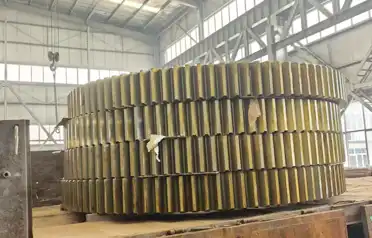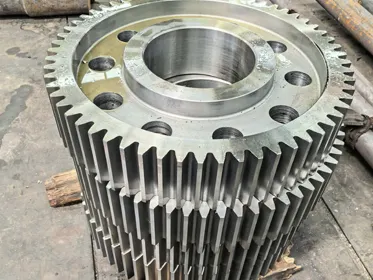

A panoramic view of mining equipment
Mining is a complex system engineering project. From surface exploration to underground tunneling, from ore extraction to refining and purification, each stage relies on specialized equipment. As the core carrier of mineral resource development, mining equipment is diverse in type and function. Based on the mining process and operational purpose, it can be divided into the following core categories, collectively forming an efficient, safe, and environmentally friendly mining production system.
I. Exploration and Surveying Equipment: The "Pioneers" of Mining Development
Before formal mining operations begin, exploration and surveying equipment undertakes the crucial tasks of resource detection, topographic mapping, and geological analysis, providing a scientific basis for mine planning and mining design. Core equipment includes: geological drilling rigs (core drilling rigs, hydrological drilling rigs, etc.), used to drill underground rock strata, collect core samples, and analyze mineral reserves and distribution; total stations and GPS positioning systems, used to accurately measure mine topography, coordinates, and boundaries, and to create topographic maps; ground-penetrating radar and geophysical equipment, used to detect the location, thickness, and geological structure of underground ore bodies through electromagnetic waves, reducing exploration blind spots; and inclinometers and pressure sensors, used to monitor the stability of geological structures and prevent geological disaster risks. The accuracy of this type of equipment directly determines the feasibility and economic viability of mine development and is the fundamental guarantee for mine construction.
II. Excavation and Mining Equipment: The "Core Force" of Ore Acquisition
Excavation and mining equipment is the main equipment for directly stripping away surface overburden and mining underground ore bodies. It is classified into different types according to the mining method (open-pit mining, underground mining). Common equipment in open-pit mines includes: excavators (hydraulic excavators, mining excavators) for excavating ore and overburden, and using buckets for efficient loading; loaders for quickly transporting bulk ore, connecting excavation and transportation; open-pit mining trucks (dump trucks) for long-distance ore transportation due to their large load capacity and high stability, with load capacities exceeding 100 tons; and bulldozers and graders for site leveling, road construction, and overburden removal. Underground mines rely on: rock drills (pneumatic rock drills, hydraulic rock drills) for drilling holes in tunnels to prepare for blasting operations; tunneling machines (cantilever tunneling machines, shield tunneling machines) for rapid tunnel excavation, reducing manual labor intensity; coal mining machines (for coal mines) and mining trolleys for mining ore along the working face, improving mining efficiency; and blasting materials (explosives, detonators, etc.) for breaking hard ore bodies, creating conditions for excavation operations.
III. Transportation and Hoisting Equipment: The "Main Artery" of Ore Flow After mining, ore needs to be transferred from the working face to the concentrator or storage site. Transportation and hoisting equipment constitutes the mine's "logistics channel," ensuring the continuous and efficient flow of ore. Ground transportation equipment, in addition to open-pit mining trucks, includes belt conveyors (fixed and mobile), which achieve long-distance, large-capacity ore transfer through continuous conveying, reducing transportation costs; and railway transportation equipment (mining trains, tracks), suitable for large-scale transportation in large mines. The transportation and hoisting equipment in underground mines is particularly specialized: mine hoists (vertical shaft hoists and inclined shaft hoists), installed at the shaft entrance, use wire ropes to pull mine cars or skips to lift underground ore to the surface, while also handling the lifting of personnel and equipment; underground electric locomotives (overhead line type and battery type) run on underground tracks to transport ore within the roadways; mine belt conveyors and scraper conveyors are laid along the underground roadways to transfer ore from the working face to the hoisting shaft; mine cars (fixed car type and tipper type) are used in conjunction with electric locomotives or hoists to load loose ore.
IV. Mineral Processing and Beneficiation Equipment: "Refining Tools" for Ore Purification The raw ore often contains a large number of impurities. Mineral processing and beneficiation equipment separates ore from impurities through physical and chemical methods, improving ore grade and creating conditions for subsequent smelting or utilization. Core equipment includes: crushing equipment (jaw crusher, cone crusher, impact crusher) to break large ore pieces into smaller pieces for easier subsequent processing; grinding equipment (ball mill, rod mill, autogenous mill) to grind the crushed ore into fine powder, ensuring thorough liberation of valuable minerals from gangue; sorting equipment (flotation machine, magnetic separator, gravity separator, electrostatic separator) to separate valuable minerals from impurities based on differences in their physicochemical properties, obtaining concentrate; classification equipment (spiral classifier, hydrocyclone) to classify the ground slurry, ensuring effective sorting; dewatering equipment (filter, filter press, thickener) to remove moisture from the concentrate, obtaining a dry concentrate product; and conveying and storage equipment (slurry pump, silo, belt conveyor) to connect various stages of mineral processing, enabling the transfer and storage of slurry and concentrate. In addition, some mines are also equipped with deep processing equipment such as roasting furnaces and leaching equipment to process low-grade ores, further improving resource utilization.
V. Safety and Environmental Protection Equipment: The "Protective Barrier" of Mine Production The mining environment is complex, posing safety hazards such as gas, dust, water hazards, and fires. Simultaneously, it faces environmental problems such as wastewater, waste residue, and dust pollution. Safety and environmental protection equipment is crucial for ensuring personnel safety and reducing environmental damage. Safety equipment includes: ventilation equipment (main fans, local ventilators) to provide fresh air underground and expel harmful gases such as gas and dust; gas monitors and dust detectors to monitor the concentration of harmful gases and dust underground in real time, issuing alarms when levels exceed standards; drainage equipment (mining centrifugal pumps, submersible pumps) to drain underground water and prevent flooding accidents; fire extinguishing equipment (fire extinguishers, fire hydrants, foam extinguishing systems) to address fire hazards; personal protective equipment (safety helmets, self-rescue devices, dust masks, protective clothing) to ensure the personal safety of workers; and emergency rescue equipment (life-saving capsules, refuge chambers, rescue drilling rigs) to provide rescue support in case of emergencies. Environmental protection equipment includes: dust removal equipment (bag filters, electrostatic precipitators) to treat mine dust and reduce air pollution; wastewater treatment equipment (sedimentation tanks, filtration tanks, integrated wastewater treatment machines) to purify mine production wastewater, discharging it after it meets standards or recycling it; waste residue treatment equipment (waste residue crushers, brick making machines) to process mine waste residue into building materials, achieving resource recycling; and noise reduction equipment (silencers, soundproof covers) to reduce equipment operating noise and minimize the impact on the surrounding environment.
VI. Auxiliary and Supporting Equipment: The "Guarantee and Support" for Mine Operation In addition to the core equipment mentioned above, mines also require a series of auxiliary and supporting equipment to ensure the smooth operation of the production process. These types of equipment include: power supply equipment (transformers, generator sets, distribution cabinets) providing power to all mine equipment; lighting equipment (explosion-proof mine lights, surface lighting) ensuring illumination conditions in underground and surface work areas; communication equipment (mine walkie-talkies, wired telephones, wireless communication base stations) enabling real-time communication between workers; lubrication equipment (lubricating oil pumps, lubrication stations) providing lubrication to moving parts and extending equipment lifespan; maintenance equipment (machine tools, cranes, welding machines) for routine maintenance and troubleshooting; and storage equipment (shelves, forklifts, cranes) for storing mine materials and spare parts.
In conclusion, the types of mining equipment cover the entire chain of mineral resource development, from precise detection in the exploration stage to efficient excavation in the mining stage, and then to transportation, ore dressing, safety and environmental protection, etc. Each type of equipment performs its specific function and works collaboratively, forming a complete equipment system for mine production. With the development of technology, mining equipment is being upgraded towards intelligence, automation, and greening. The application of unmanned mining trolleys, intelligent belt conveyors, and environmentally friendly mineral processing equipment not only improves mining production efficiency but also reduces safety risks and environmental impact, providing strong support for the sustainable development of mineral resources.
Related News
- What Is an Electrically-Driven Steel Ladle Car and Why Is It Essential for Modern Steel Plants
- How Does an Electrically-Driven Steel Ladle Car Improve Safety and Efficiency in Molten Metal Transport
- How Does a Hydraulic-Driven Steel Ladle Car Transform Modern Steelmaking Logistics
- How Can a Centrifugal Bucket Elevator Significantly Boost Your Material Handling Efficiency
- What Safety Advantages Does Tension Monitoring Provide in Plate Conveyors?
- What Makes a Steel Moving Machine the Ideal Solution for Heavy Material Handling?
Leave me a message