
Frequent Steel Breakouts in Continuous Casting Tundishes? Tangshan Yuexin Guides You to the Right Manufacturer to Cut Costs and Boost Efficiency
On continuous casting lines, steel mills dread nothing more than a "tundish breakout." A single breakout can range from damaging casting equipment and disrupting the production rhythm to scrapping an entire heat of molten steel and forcing a work stoppage for cleanup—often resulting in losses of hundreds of thousands per incident. Many procurement departments focus solely on unit price during tendering, overlooking the fact that the true driver of total cost isn't the shell's quoted price, but its ability to reliably withstand the designed number of heats under conditions of extreme heat, heavy loads, and rapid thermal cycling. Avoiding even one unplanned casting stoppage saves far more money than any difference in the initial purchase price.
Why the Continuous Casting Tundish Is Key to Cost Reduction for Steel Mills
Positioned between the ladle and the mold, the tundish receives molten steel, stabilizes flow pressure, removes impurities, and distributes the steel evenly to the various casting strands. Subjected to intense thermal radiation (exceeding 1,000°C) and the erosive force of molten steel, a shell with poorly managed residual welding stress is highly prone to deformation, cracking, or even breakouts during operation. A high-quality shell must not only be durable but also facilitate refractory lining installation, the alignment of long nozzles and submerged entry nozzles (SENs), and rapid lifting and replacement. Consequently, steel mills are shifting their selection criteria from "price comparison" to "process stability." Stable processes lead to genuine reductions in casting stoppages, maintenance needs, and refractory wear—which is why shell manufacturing processes have become a key focus in supplier audits.
How a Q345B Steel Plate Becomes a Qualified Continuous Casting Shell
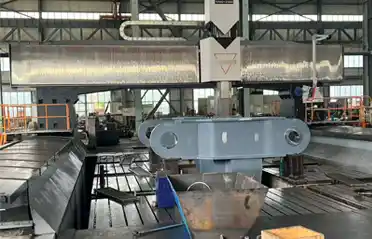
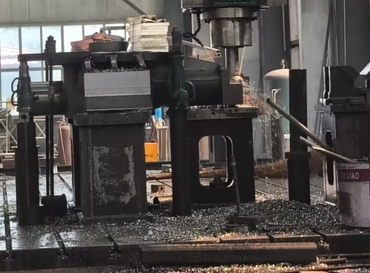
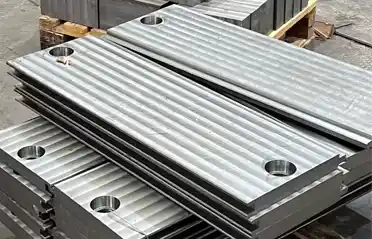
Yuexin Machinery has been manufacturing these products for over two decades. The tundish body is fabricated by cutting and welding Q345B steel plates. After welding, the entire assembly undergoes furnace-based stress relief to fully eliminate residual stresses, preventing the equipment from undergoing subtle deformation when exposed to heat on-site. Finally, CNC machining ensures dimensional precision for mounting surfaces, nozzle block openings, and lifting lug positions. Although these tolerances may seem minor, they directly determine the tightness of the refractory lining and the stability of the molten steel flow, thereby influencing the surface quality of the cast slab and the ladle exchange rhythm.
22 Years of Deep Roots in Tangshan, Serving Steel Plants Across Beijing, Tianjin, and Hebei
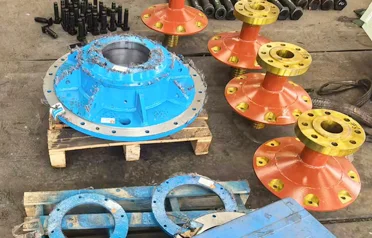
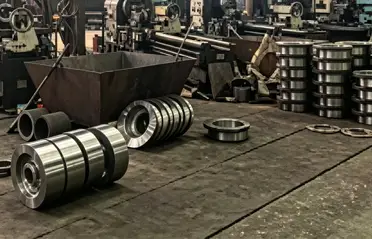
As a major national steel production hub, Tangshan is home to Tangshan Yuexin Machinery Manufacturing Co., Ltd. Based in Xige Town, Fengnan District, the company has long supplied steel plants across Hebei, Beijing, and Tianjin; Tangshan Ruifeng Steel is among its long-standing clients. Beyond the tundish shell itself, Yuexin Machinery handles mechanical parts machining, riveted and welded structural components, and the supply of auxiliary steel materials. They offer customization regarding the number of strands, steel capacity, and external dimensions based on actual operating conditions, rather than simply adhering to fixed, off-the-shelf blueprints. Their service extends beyond delivery to include on-site guidance for refractory lining and nozzle installation, ensuring alignment and pre-heating are executed correctly before a new heat begins production. Furthermore, for clients in the same region, their on-site response time is significantly faster than that of manufacturers based elsewhere.
Choosing a Manufacturer: Look Beyond Price
To determine if a manufacturer is reliable, consider three factors: whether the unit undergoes comprehensive stress-relief treatment after welding; whether key dimensions are verified through CNC machining and inspection records; and whether there is a track record of long-term performance with steel plants operating under similar conditions in the same region. The tens of thousands saved by winning a bid on low price alone are often dwarfed by the losses incurred from a single unplanned casting stoppage.
As continuous casting evolves toward multi-strand configurations, higher casting speeds, and extended furnace lifespans, the demands for precision and durability in tundish shells will only increase. Selecting a manufacturing partner that truly understands the process—and is willing to work on-site alongside the steel plant to resolve issues—is the most reliable strategy for achieving long-term cost reduction and efficiency gains in continuous casting systems.
Related News
- Can Tangshan Yuexin Solve Your Mechanical Parts Customization Needs?
- How to Choose a Manufacturer for Custom Non-Standard Parts? Insights from Tangshan Yuexin Machinery (22 Years of Experience)
- When outsourcing the machining of large-scale lifting arms, how can enterprises select a reliable manufacturer? How does the Tangshan Yuexin Gantry Machining Center balance precision and delivery schedules through customized processes?
- Heavy Equipment Installation Precision Problems? Tangshan Yuexin Machinery Ships Custom Non-Standard Base, Solving Large Foundation Part Challenges with 22 Years of Experience
- Tangshan Yuexin Machinery Manufacturing Co., Ltd. Successfully Ships a Batch of Large-Scale Mechanical Structural Components
- Production lines urgently need replacement parts but can't find standard specifications? Is Tangshan Yuexin Machinery, a non-standard parts customization manufacturer, reliable?
Leave me a message