
In which industries are large, heavy-duty, non-standard components used?
On the factory floor, there is a category of parts that may seem inconspicuous yet determine whether an entire production line can operate. These are not off-the-shelf standard parts; rather, they are custom-made components tailored to specific equipment dimensions, load-bearing requirements, and installation environments. Tangshan Yuexin Machinery Co., Ltd. is one such manufacturer specializing in this field, focusing on the CNC machining, riveting, welding, and integrated manufacturing of large, heavy-duty, non-standard components. So, in which specific industries are these non-standard mechanical parts used? Let’s look at some real-world applications.
I. The Metallurgical Industry: "Tough Components" for Rolling Mills and Continuous Casting Lines
Metallurgy is the industry with the highest concentration of heavy-duty, non-standard components. A steel rolling line transforms steel billets into finished products through multiple stages—heating, rolling, straightening, and cooling—with each stage involving numerous components subjected to high temperatures, heavy loads, and continuous impact.
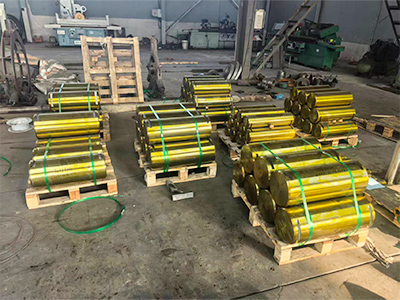
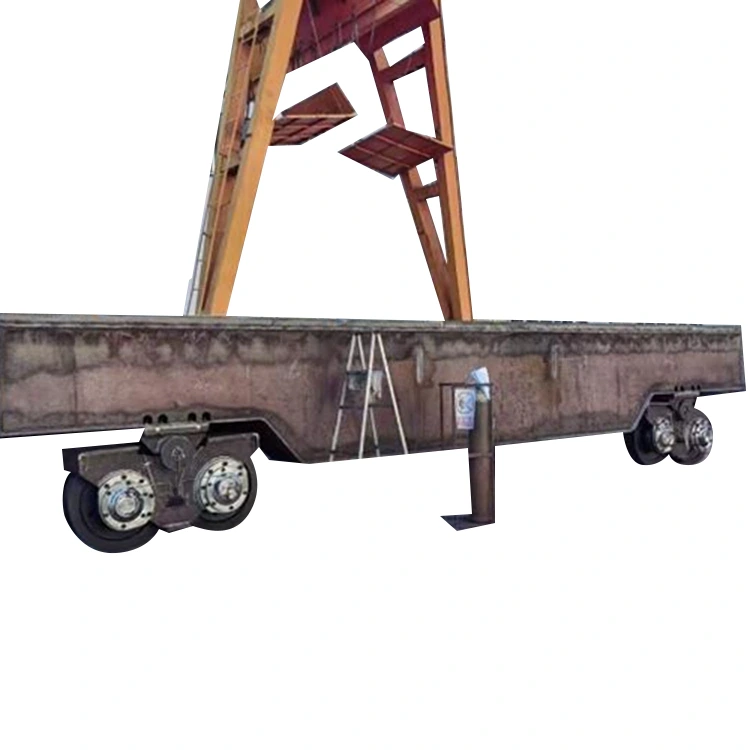
Tangshan Yuexin Machinery’s processing capabilities in this sector cover equipment such as rolling mills, continuous casting machines, ladle cars, rolls, roll shafts, guide plates, and metallurgical bearing housings. Take rolls and roll shafts, for example: they come into direct contact with red-hot steel, demanding high material uniformity and machining precision. Guide plates, which direct the workpiece accurately into the roll pass, feature irregular shapes and are prone to rapid wear, making them classic examples of non-standard, high-wear parts. Metallurgical bearing housings must withstand immense radial forces during rolling; due to their large size and complex structures, their production often requires a combination of CNC machining and riveting/welding processes.
II. Mining and Excavation Equipment: Heavy-Duty Transmission and Large Structural Components
Mining equipment operates year-round in environments characterized by dust, vibration, and heavy loads. Consequently, component failure rates are far higher than those of ordinary machinery, leading to a greater need for replacements and spare parts.
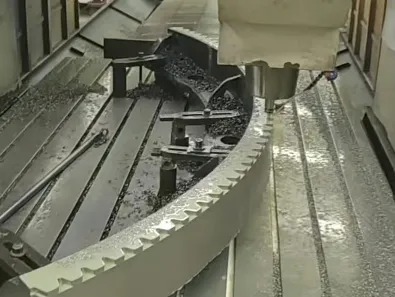
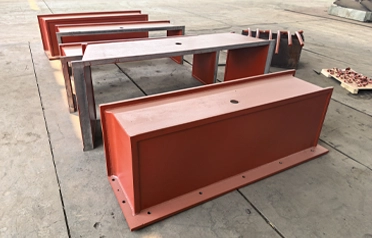
In the field of mining and excavation equipment, common non-standard machined parts include equipment accessories, large gear rings, heavy-duty transmission components, and large structural elements such as electric shovel bases. Large gear rings are core transmission components; tooth profile accuracy and axial runout directly affect the operational stability of the entire machine. Structural components like electric shovel bases are massive and feature numerous welds; they require initial fabrication via riveting and welding, followed by precision machining on CNC equipment to ensure the flatness of assembly surfaces and the accuracy of hole positioning.
III. Power Industry: Machining of Auxiliary Equipment Components
While primary power generation equipment is typically manufactured by OEMs, numerous auxiliary systems—such as fans, coal mills, feeders, and dust removal equipment—also rely on custom-manufactured components.
Tangshan Yuexin Machinery primarily undertakes the machining of components for power industry auxiliary equipment. Although the unit value of these parts may not always be the highest, they come in diverse specifications, require tight delivery schedules, and demand strict adherence to material and welding quality standards. Consequently, the machining facility must possess comprehensive capabilities ranging from blueprint interpretation to final product inspection.
IV. Shipbuilding: Marine Structural Components and Large-Scale Parts
Shipyards represent another major sector utilizing heavy-duty, custom-manufactured components. From hull sections, propulsion systems, rudder assemblies, and shafting to hatch covers and mooring equipment, almost every part of a ship requires large, custom-made components.
In shipbuilding, common custom-machined items include large marine flanges, components for rudder and shafting systems, diesel engine bases, hatch cover structures, and heavy welded components for hull sections. These parts are typically large with extensive weld seams and must meet classification society standards for welding processes and dimensional accuracy. They often require initial fabrication through riveting and welding followed by precision CNC machining to ensure proper fit during shipboard assembly.
V. Rail Transit: Bogies and Segment Molds
Rail transit imposes extremely strict requirements regarding component safety and consistency, placing significant demands on the machining precision and inspection protocols of custom manufacturing facilities. Bogies serve as the core load-bearing structures of a train's running gear, and the machining precision of their components is directly linked to operational safety. Meanwhile, the segment molds used in subway construction determine the dimensional uniformity of concrete tunnel segments and the tightness of their fit during assembly. Both categories of products are typical examples of non-standard, heavy-duty components: they feature complex structures, numerous machined surfaces, and stringent geometric dimensioning and tolerancing (GD&T) requirements. Meeting the acceptance standards of the rail transit sector necessitates the use of large-scale CNC equipment combined with reliable riveting and welding processes.
VI. Construction Machinery and Conveying Equipment: From Flanges to Bridge Launchers
In the fields of construction machinery and conveying equipment, the application of non-standard parts is more diverse, yet each component performs a specific load-bearing function.
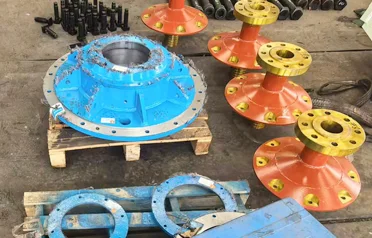
Commonly machined items include conveyor components, press guide rails, heavy-duty gears for bridge launchers, and large-scale flanges. Press guide rails require exceptional straightness over long distances, with the primary machining challenge lying in deformation control. Heavy-duty gears for bridge launchers must withstand repeated impacts at bridge construction sites, making both gear tooth strength and assembly precision critical. Large-scale flanges are widely used for connecting pipelines and equipment; their large outer diameters and numerous bolt holes mean that the precision of hole positioning directly impacts on-site installation.
From metallurgical rolling mills to mining electric shovels, from power plant auxiliary equipment to shipbuilding, and from rail transit to construction machinery and conveying equipment—large, heavy-duty, non-standard components are integral to virtually every key link in heavy industry. Although they lack standardized model numbers, they must reliably withstand the rigors of high temperatures, heavy loads, and continuous operation in their respective applications.
Tangshan Yuexin Machinery Co., Ltd. translates these diverse industry demands into tangible components by focusing on three core areas: CNC machining, riveting and welding, and integrated manufacturing. For equipment operators, finding a non-standard parts manufacturer capable of accurately interpreting blueprints, maintaining precision, and meeting delivery schedules is often more important than simply comparing prices.
Related News
- Tangshan Yuexin Machinery Manufacturing Co., Ltd.: From Raw Material to Finished Product, Large Workpiece Processing Completely Within the Factory
- Who should you contact for machining the sector section of a continuous casting machine? Tangshan Xinyue Machinery Factory provides the answer.
- Deeply Rooted in High-End Machinery Manufacturing | Tangshan Xinyue Machinery Factory Gains Long-Term Recognition and Cooperation from Numerous Large Heavy Industry Enterprises Due to its Superior Quality
- What's the Difference Between Non-standard and Standard Parts? A Tangshan Non-standard Parts Processing Manufacturer Explains It
- How Can Large CNC Gantry Milling Machines Facilitate Heavy Component Machining? Tangshan Yuexin Machinery's Customized Equipment Successfully Assembled
- How to Ensure Stable Operation of Large Equipment with Heavy-Duty Lifting Arms? Tangshan Yuexin Machinery's Customized Components Successfully Shipped to Qinhuangdao
Leave me a message