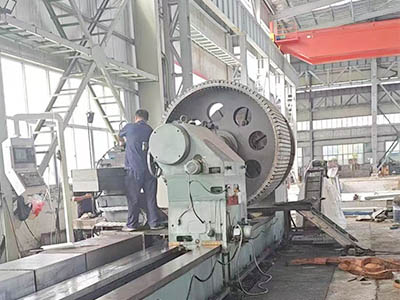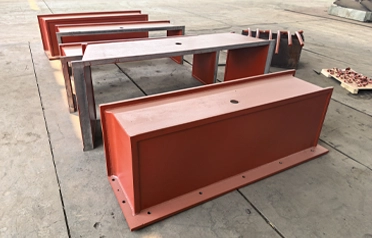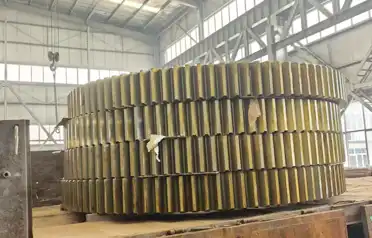

Why Did Welded Fabrications Suffer from Persistent Quality Failures? Tangshan Yuexin Machinery Mobilizes Multi-Department Task Force for a Fortnight-Long Investigation, Delivering Compliant Custom Workpieces After Root-Cause Analysis and Rectification
I. Frequent Workpiece Failures Prompt Formation of Emergency Task Force
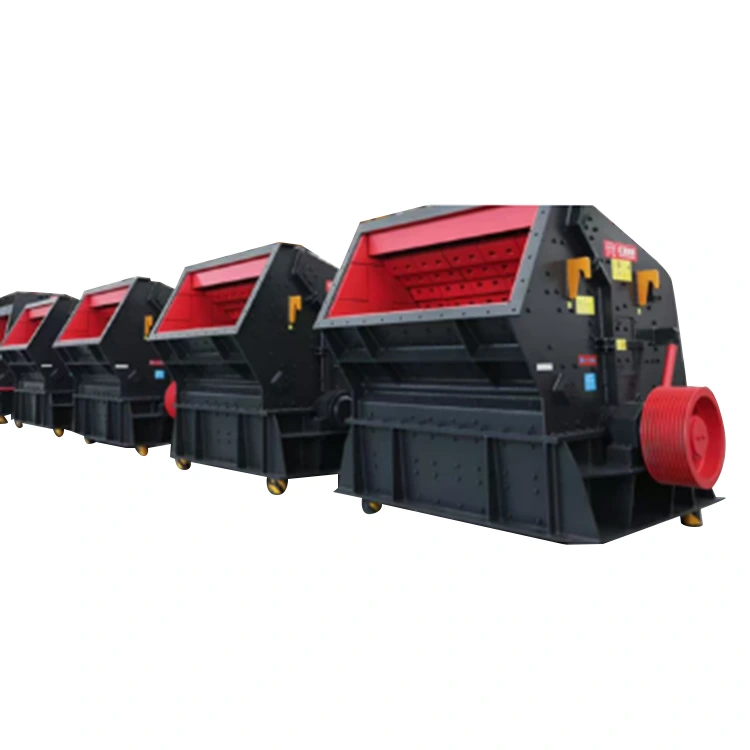
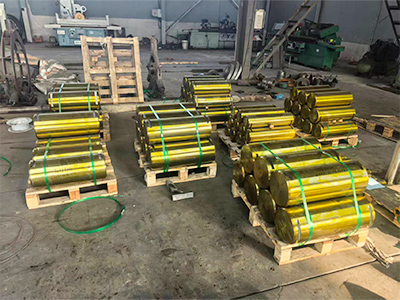
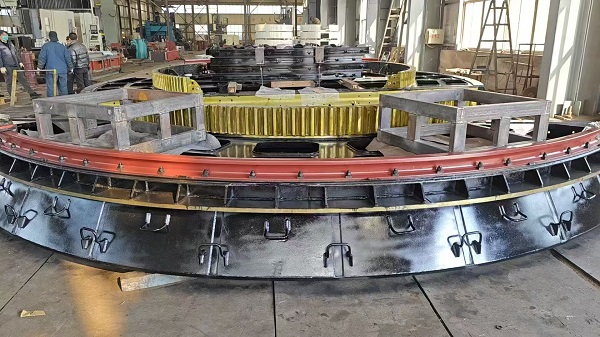
As core load-bearing and assembly components in mechanical equipment, the process precision and welding stability of welded fabrications directly determine the equipment's operational safety, service life, and overall performance. A key client’s custom-ordered welded fabrications had long exhibited various quality defects; despite multiple rounds of adjustments and rectifications, the issues remained uneradicated. This not only severely delayed the client's production schedule and increased time and labor costs for both parties but also posed a significant challenge to our long-standing, stable cooperative relationship. Faced with this dilemma, Tangshan Yuexin Machinery remained steadfast in prioritizing the client's quality requirements. We firmly rejected superficial repairs or perfunctory solutions, instead immediately assembling a specialized task force comprising key personnel from technical, production, and other critical departments. This team focused on core pain points—such as welding process defects, dimensional deviations, and insufficient weld integrity—and resolved to conduct a thorough root-cause analysis and comprehensive rectification to fundamentally and permanently resolve these quality issues.
II. Multi-Department Collaboration: A Fortnight of Comprehensive Process Tracing and Investigation
Fully aware that complex welding process challenges cannot be overcome by a single department working in isolation, Tangshan Yuexin Machinery immediately activated a cross-departmental collaborative mechanism. We rapidly mobilized core personnel from the Technical Department, Production Department, Welding Workshop, and Quality Inspection Department to conduct a comprehensive, full-process investigation spanning half a month. The task force abandoned previous broad-stroke troubleshooting methods, instead meticulously deconstructing and reviewing every stage of the production process for the welded fabrications—from raw material selection, cutting, bending, and assembly, through riveting and welding, grinding and calibration, to final product inspection. Throughout this process, the team rigorously verified every process parameter, precisely cross-referenced standards against design blueprints, conducted random inspections of raw material composition, and comprehensively reviewed on-site operational workflows. By scrutinizing every minute detail, they strove to pinpoint the exact source of the problems with absolute precision. Addressing common issues identified during the inspection—such as workpiece deformation, weld cracking, and out-of-tolerance dimensions—the team undertook a piece-by-piece disassembly and analysis, meticulously documenting all relevant data. They organized numerous internal thematic workshops and repeatedly refined their corrective strategies. Through multiple rounds of sample testing and continuous optimization of process details, they gradually pinpointed the core causes of the problems. By rigorously controlling every critical process node, they laid a solid foundation for subsequent rectification efforts.
III. Precise Root-Cause Analysis: Comprehensive Process Rectification to Break Through Bottlenecks
After half a month of intensive communication, meticulous refinement of details, and multiple rounds of sample validation, the company's dedicated task force successfully and precisely identified the root causes of the quality issues affecting the riveted and welded components. These issues were found to stem from a confluence of factors: a mismatch between process parameters and custom requirements; lax on-site supervision of welding procedures; failure to meet precision standards during assembly and positioning; and discrepancies in the compatibility between the post-welding heat treatment process and the workpiece material. Having accurately identified the root causes, the task force immediately formulated and implemented a targeted rectification plan. This involved a systematic optimization and upgrade of the entire production workflow—ranging from refining raw material selection criteria and enhancing cutting precision, to standardizing riveting and welding operations and improving welding techniques, and finally, to perfecting the workpiece straightening and aging treatment stages. Each corrective measure underwent small-batch trial production and multiple rounds of rigorous testing and comparison to ensure its scientific validity and effectiveness. This approach guarantees that similar quality issues are eliminated at the source, while comprehensively and strictly controlling the structural strength, dimensional accuracy, weld integrity, and surface flatness of the riveted and welded components.
IV. Successful Delivery: Demonstrating Corporate Responsibility
Following half a month of intensive problem-solving and continuous optimization, Tangshan Yuexin Machinery successfully resolved the long-standing quality issues regarding the riveted and welded components that had been plaguing the client. The rectified components underwent comprehensive inspection by a professional quality control department; all performance indicators met both industry standards and the client's specific requirements. With precise dimensions, robust and reliable welds, and a stable, durable structure, the entire batch passed quality inspection and was successfully delivered as finished goods, thereby completely resolving the client's production difficulties and ensuring the orderly advancement of their manufacturing operations. This challenging undertaking not only tested the company's technical prowess and emergency response capabilities, but also vividly demonstrated Tangshan Yuexin Machinery's spirit of craftsmanship—characterized by a relentless pursuit of excellence—as well as its rigorous process control and profound sense of corporate responsibility. Moving forward, the company will continue to deepen its focus within the specialized field of custom riveting and welding. By continuously optimizing production processes, elevating quality inspection standards, and refining its service framework, we aim to leverage our formidable technical strength and stringent quality control measures to provide clients with high-quality fabricated components and comprehensive, one-stop custom machining services. We are committed to earnestly resolving a wide array of technical challenges, working hand in hand with our clients to achieve steady, mutually beneficial growth and shared success.
Related News
- Tangshan Yuexin Machinery Manufacturing Co., Ltd.: From Raw Material to Finished Product, Large Workpiece Processing Completely Within the Factory
- Who should you contact for machining the sector section of a continuous casting machine? Tangshan Xinyue Machinery Factory provides the answer.
- Deeply Rooted in High-End Machinery Manufacturing | Tangshan Xinyue Machinery Factory Gains Long-Term Recognition and Cooperation from Numerous Large Heavy Industry Enterprises Due to its Superior Quality
- What's the Difference Between Non-standard and Standard Parts? A Tangshan Non-standard Parts Processing Manufacturer Explains It
- In which industries are large, heavy-duty, non-standard components used?
- How Can Large CNC Gantry Milling Machines Facilitate Heavy Component Machining? Tangshan Yuexin Machinery's Customized Equipment Successfully Assembled
Leave me a message